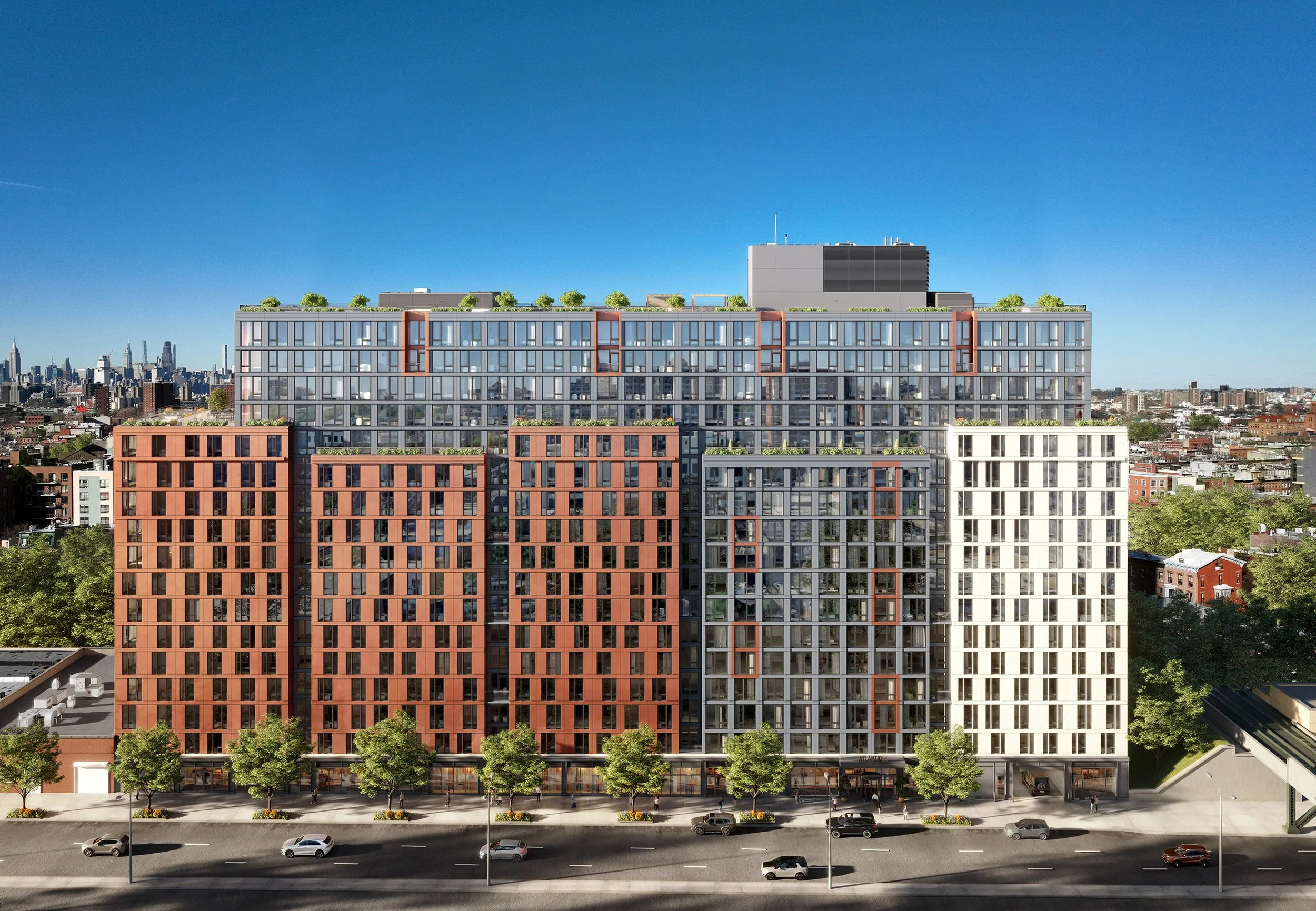
ATLANTIC BK
This 474,000-square-foot development at 1057 Atlantic Avenue brings 137 permanently affordable units to Bedford-Stuyvesant, increasing the amount of affordable units built in the neighborhood since 2014 by more than 50%.
Totem worked with local community-based organizations, including Bedford Stuyvesant Restoration Corporation, to help secure a myriad of benefits for the neighborhood during the entitlement process. In total, the building comprises 456 units in a mix of one-bedroom, two-bedroom, and three-bedroom residences and will also bring active retail uses to the street level character of Atlantic Avenue by featuring local small retailers.
Another significant feature of the project is a first-of-its-kind Community Impact Fund, managed by the Brooklyn Community Foundation, seeded annually with $50,000 to provide grants to local community-based organizations. The first grant was made to the Lefferts Place Block Association to make improvements to their community garden. Once the building is occupied, an advisory committee made up of residents in the building will be created to decide on priority impact areas, application process, and future allocations.
“Totem’s Community Impact Fund at Brooklyn Community Foundation is potentially an example-setting partnership for us that ensures that money coming into the community stays in the community and is used to help better the lives of its residents.
— Sarah Shannon, Chief Operating Officer, Brooklyn Community Foundation

“This development team led by Totem started conversations with myself and Community Board 3 well in advance of any votes or ULURP certification. As a result, we were able to use this private development to achieve deep yet reasonable community priorities like significant affordable housing, neighborhood retail space for local entrepreneurs, and good paying jobs through local hiring. Not to mention the sustainability measures and a first-of-its kind community impact fund to ensure neighborhood engagement beyond the walls of this building. This approach should become a template for responsible development.”
— Robert Cornegy, former City Council member